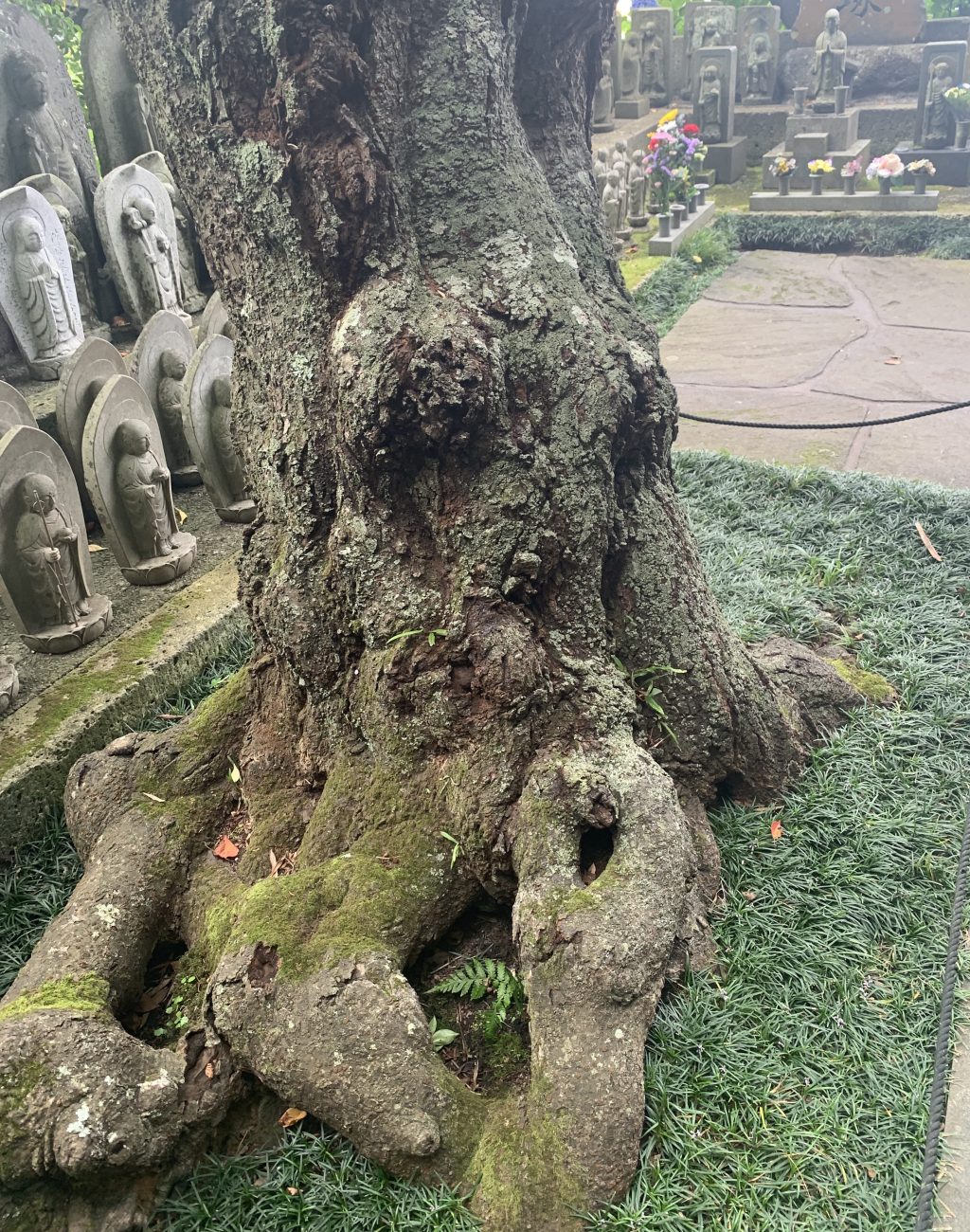
Whenever there is an earthquake, you are forced to pay attention. The land demands it. In Japan, you learn from a young age to become still, to feel the uneasy shifting of the ground. You hide under a desk, protect your head, and wait. The strength builds as seconds pass, a terrifying reminder of a force greater than yourself, before it slowly, grudgingly, settles back into silence. It was my first and most visceral theology: a direct, wordless conversation between my body and the planet. It needed no sermon.
When I moved to Malawi, the earth was still. People would ask about the earthquakes in Japan, and I’d explain them as a powerful but natural fact of life: they can be scary, but if you follow the protocols, you learn to live with them. In Malawi, the central text of life was the Bible. I had to learn to be a willing participant, learning to respect the book that was the heart of my family and friends’ community. I found genuine wisdom and warmth within its pages, a tool for connection and understanding about our purposes in life.
But I struggled with its language for the natural world. I learned that in the Bible, earthquakes are depicted as manifestations of divine might—a framing I later found echoed in other traditions, where they are seen as spiritual signs or portents. I found this universal impulse to treat a natural, continuous geological phenomenon as a message or a metaphor to be a heavy burden to place upon the land.
And it is true that earthquakes can be deadly. They are a force that causes destruction. They are a ‘disaster’ in the most literal sense when they wipe out populations. But sometimes I think that the fear they instill is rooted in our collective fear of death. What if we understood death not as a punishment to be feared, but as a part of the cycle to be accepted? Once we reach that point of acceptance, the earthquake itself transforms. It remains a powerful, respectful force to prepare for, but the primal fear of it begins to dissolve. We can see it for what it is: the land, simply, speaking in its most powerful voice. Japan’s own history, documented for over a millennium on the Pacific Ring of Fire, is a testament to this enduring, non-moralistic dialogue between land and life.
When I returned to Japan, the Bible naturally faded from my daily life. Its absence did not create a void of atheism, but a quiet space, making room for a more ancient sound. Feeling an earthquake again after so long was a powerful reminder. An earthquake is a loud, undeniable communication.
I realized that even lands that do not shake have their own ways of speaking—through the whisper of winds across plains or the slow patience of a growing forest. But because the tremor is the language I know best, this was my vital reminder: the conversation with the world never ceased. I simply need to stay awake, and listen for all the other ways life is trying to speak.
My awakening was a return to this first language. I turned to the spirituality inherent in Japan. This includes the Shinto understanding of kami—the spirit that animates rocks, trees, and waterfalls. My late grandmother was Buddhist, and in Japan, Buddhism and Shinto coexist, offering different paths. Shinto is about dedicating oneself to the deities of this world, consoling angry spirits to prevent disasters, and giving thanks for peace and harvest. Buddhism, which journeyed from India to Japan, is the pursuit of enlightenment beyond this world’s suffering, a philosophy that directly engages with the nature of life and death.
I didn’t have to choose one. I simply had to listen. The Bible was a tool to speak about God. The land was a direct experience of God.
I know this is not just a Japanese reclamation. In my heart, I feel the echo of my ancestors from Africa, who understood this concept intimately. The Bible was a tool I used for a time to build a bridge to a community I loved. But the land, including the trembling earth, was never a tool. It is the source. And it has always, always been speaking.
And so now, every time the earth shakes, I embrace the language of the land and listen to what it has to say.


Leave a Comment