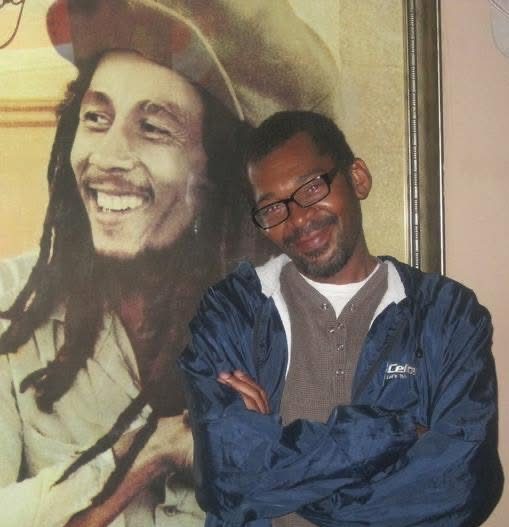
My dad taught me that the most important thing is to know my family history and where I come from. He spoke of the strength inherent in our family name, a spirit carried for generations, and of his immense pride in being African—something he insisted I also embody. His life is a collection of magnificent, unfinished blueprints—a legacy not of what was completed, but of what had passionately, relentlessly begun.
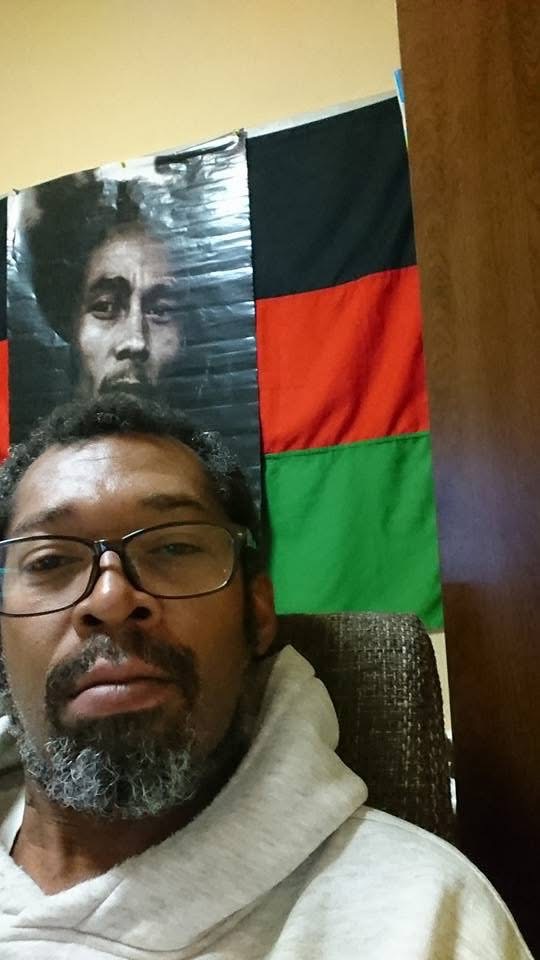
He possessed a charismatic, magnetic presence and a brilliant, analytical mind. A natural storyteller who could captivate a room, he was deeply respected for his intellect. He was a true Pan-Africanist and Black radical; he didn’t just enjoy reggae music, he lived by its principles, seeing it as a philosophy of liberation, resilience, and pride.
Yet, his identity was forever shadowed by his decision to abandon his university degree—a choice that led to professional limitations and a lifelong sense of unfulfilled potential. He also carried the deep, hidden trauma of having been a victim of domestic abuse in his first marriage, a central, formative wound that shaped his later struggles. Despite this, he found his calling in nurturing others, showing a special gentleness and respect for both children and the elderly. He saw education not as a job, but as a tool for empowerment. His life was a constant contrast: a powerful public persona masking private torment, immense love coexisting with deep pain.
As his daughter, I now understand how blessed I am to have had a father who cared so deeply. He grew up in a matriarchal environment that taught him to respect women from a young age, and he always aspired to emulate his own father, an intellectual. This was difficult for me to see at the time, as I watched his alcoholism worsen over the years. Tales of him causing trouble on the weekends were a constant refrain. My stepmom lived in perpetual worry for their marriage, and I often found myself stepping between them, attempting to hold my dad accountable. I was constantly angry with him for his recklessness, especially with finances that were always diverted to alcohol, leaving my mom with the full responsibility for me and our home.
Then, one day in the summer of 2017, everything changed. He collapsed outside and an ambulance rushed him to the hospital. I accompanied him, waiting for hours to hear from the doctors. My mom left work early and joined me. The initial blood tests revealed extremely poor results—his liver was clearly failing. The seizures kept recurring, causing muscle cell breakdown that blocked his kidneys and prevented him from urinating, forcing the doctors to introduce dialysis. However, the dialysis somehow triggered the worst-case scenario: internal bleeding in his brain. Up until that point, he had been hallucinating and struggling to speak clearly, but when the doctors ran further tests, it was obvious his condition had drastically worsened. He couldn’t move his left hand or any part of his left side—a frighteningly clear sign that something was very wrong. Although surgery to address the bleeding was successful, his left side remained paralyzed. My mom and I supported his rehabilitation until he was able to return to Malawi.
He now lives back home in Malawi with his parents. He has not fully recovered, but he is doing better. He is still alive. Everyone in the family is happy and credits him for being such a fighter—and they are right. This entire experience left me with a bittersweet feeling. I was glad that the constant arguments about his addiction were over, yet I sensed it was somehow incomplete. The man who emerged from the surgery was not the man who had chosen to stop drinking; he was a man whose body and memory had been permanently altered. The addiction was physically over, but the accountability I longed for—the conscious choice to be better for his family—was now a conversation he could no longer remember to have. I believed my relationship with this man was forever changed.
The dad I knew was very passionate about world affairs, and he made sure I could identify every country on each continent. A world map was always on our wall. He talked to me about Black struggles throughout history, from the history of slavery to ongoing struggles like segregation within the music industry. Speaking of music, he loved all kinds of genres, like neo-soul and R&B, but he constantly played reggae in the house—sometimes just a mix of instrumentals. His personal hobby was basketball; he enjoyed both playing and watching the NBA.
All these things stood out to me from a young age, and I sometimes thought my dad was a weirdo. But I also noticed he had many close friends who were always excited to see him. He taught English to kids, and they, too, were always excited for his lessons. I think because of the constant talk at home about his drinking, my perspective was always filtered through that lens. At times, I was convinced he just liked to party and was unnecessarily strict about the knowledge I needed to accumulate from such a young age. He also emphasized that I needed to actively engage in chores at home and even volunteer. He said I needed to always ask questions in class.
I have to admit that the education and wisdom I received from my dad clearly shaped who I am today. In reflecting on his life, I’ve come to see his story as intensely romantic in the classical, tragic sense. His defining actions were driven by powerful loyalty and love: he sacrificed his career for a relationship, abandoning his studies to return to Japan and marry my biological mother; he fought the system to save his daughter from a domestically abusive mother; and he was sustained by the unwavering loyalty of his second wife and me during his hospital stay. This capacity for deep feeling was both his greatest strength and, when intertwined with his pain, the source of his most devastating choices.
And this is the reason why I am writing this blog: to leave a digital footprint on his behalf for what kind of a man he really was. Yes, most people like him very much already, but I feel I owe him this because I ended up growing resentful without fully acknowledging he was, and still is, a wonderful dad.
So, if I were to give a name to the man I knew, I would call his life…
The Unfinished Symphony
For my dad, reggae was not just music; it was the philosophical blueprint he used to make sense of his own unfinished symphony. The bassline was the steady pulse of Pan-African pride; the lyrics were the verses of struggle and liberation that narrated his life. In Bob Marley’s words, he found the language for his own battles and beliefs.
He sought to “Emancipate yourselves from mental slavery,” not just as a political ideal, but as a personal imperative for his child, his students, and even his nieces and nephews. He filled our home with maps and history lessons to free our minds before the world could ever confine them. This was his act of liberation.
His struggle with addiction and pain was his deepest contradiction. He lived the truth that “You never know how strong you are until being strong is your only choice.” I watched this strength in the hospital, and I see it now in his partial recovery. But his courage was also born from fear—the fear of his own inadequacy and his past trauma became the very force that propelled him to be a better man in his lucid moments, even when he kept falling short.
He was, in so many ways, “the stone that the builder refused.” A brilliant mind that abandoned its formal structure, a teacher who was not always able to teach himself, a cornerstone of potential that society often overlooked. Yet, in the architecture of my life and the lives he touched, he is the head cornerstone. The lessons he imparted, the pride he instilled, are his lasting foundation.
He understood the cost of love, that “everyone is going to hurt you. You just got to find the ones worth suffering for.” He suffered for his child, and his family, in turn, found him worth suffering for during his darkest hours. He always tried to live by one simple yet profound command: “Just can’t live that negative way… make way for the positive day.”
His symphony is unfinished. The melodies of his intellect and the rhythms of his passion are punctuated by the dissonance of his pain. I used to hear only the dissonance, but now I understand it as part of the composition. The music he left behind is no longer just his soundtrack, but mine: the rhythm of a fighter, the melody of a teacher, the complex and enduring song of a man I am proud to call my dad.
 The Conscious Bridge
Leave a Comment