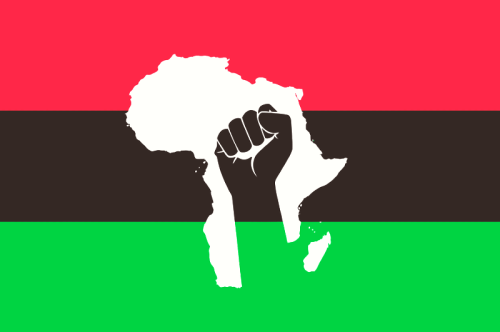
Lately, I’ve been thinking a lot about how we got here. As someone who has navigated the spaces between strict definitions, I’m drawn to philosophies that try to build a world where belonging isn’t conditional, but a foundational right. This led me down a path to Pan-Africanism.
We often hear it as a political slogan, but I’ve come to see it as something deeper: a complete philosophy for building a society. It’s a vision that feels especially urgent, not just for a continent, but for anyone thinking about community, power, and who gets to define the terms of inclusion. I’ve been learning from Kwame Nkrumah, whose frameworks, particularly in Consciencism, have helped me connect these big ideas to a human scale.
So, let’s talk about it. Not as a distant theory, but as a set of ideas about people, power, and the land we stand on.
I. The Foundation Isn’t Land—It’s People
If there’s one pillar everything else rests on, it’s Humanism. This is the simple, radical idea that people—their dignity, their well-being, their collective potential—are the most important foundation of any society. It’s the opposite of seeing people as tools for someone else’s profit or progress, which is exploitation. As Nkrumah establishes, this is the “cardinal ethical principle” rooted in “the belief in the oneness of humanity” (95). It recognizes our unique spark: our ability to master fire, to create tools, and to imagine a future together. Not to dominate, but to build.
II. Politics: When “We” Becomes a Question
Politics is simply what happens when people come together, and the central political dream of Pan-Africanism is vast: one continent-wide super-state, or a United African State.
In our modern world, a nation without a strong, unified state is vulnerable. Nkrumah argued that “the continental union of Africa is an inescapable desideratum if we are to be saved from the clutches of neo-colonialism and imperialism” (103). A unified political structure is envisioned as the necessary shield to finally secure a self-determined future.
This idea of the state as a modern manager of order forces a difficult question: what tools do we need to protect our collective “we”?
And within that “we,” ideology lives. This is the daily choice of how we interact:
- Individualism (me before we) vs. Collectivism (we before me)
- Egalitarianism (we are all equal) vs. Elitism (some are inherently better)
Elitism is particularly toxic. It’s the foundation of white supremacy, racism, sexism, classism. It creates categories of “insiders” and perpetual “outsiders.” Pan-Africanism, born from the fight against this very poison, challenges it at its core.
III. Economics: Our Relationship with the Earth
But people don’t live on ideas alone. We live with nature. Economics, in this view, is how we use what the earth provides. The philosophy is brutally honest about history: an industrialized nation can easily dominate a non-industrialized one. That imbalance is the engine of colonization.
So, the answer isn’t to reject tools, but to master them. Industrialization becomes a step toward true independence. For Nkrumah, this meant Africa must “embark upon a course of socialist reconstruction” predicated on “scientific socialism” (78) and achieve “rapid industrialization” (105). But the goal isn’t just production for its own sake. The goal is to reach a level of wealth that can sustain socialism, where that wealth circulates to lift the entire people, not just a private few.
IV. A Spirituality of Matter
This is where the philosophy surprised me and felt most resonant. Pan-Africanist thought, in Nkrumah’s framing, is “grounded in philosophical materialism” (78)—the idea that our reality and our ideas spring from the physical world.
In fact, it frames African spiritualism as deeply materialistic, and therefore, deeply scientific. Spirituality isn’t an escape from the world, but a profound relationship with it. Think of meditation: you must first correct your posture to breathe properly. Nkrumah synthesizes this with the humanist ethos of Africa’s past, noting, “In the life of the traditional African society, socialism was practiced… If one seeks the social-political ancestor of socialism, one must go to communalism” (73). Matter and spirit, the modern and the traditional, are unified as one.
This is the opposite of philosophical idealism, where spirit comes first and matter comes from it. One view sees spirit in matter; the other sees matter as coming from spirit. This difference shapes how a society treats the Earth: as a partner, or as a servant to be controlled.
⭐︎ Four Pillars of a Vision
Pulling it all together, Pan-Africanism envisions a socialist model built on four components:
- Materialist: Grounded in scientific, practical methods.
- Humanist: With the dignity of people at its heart.
- With a State: A unified political structure for protection and collective will.
- Industrialized: Possessing the tools for self-sufficient development.
This blueprint directly mirrors Nkrumah’s project: the creation of a new ideology— “philosophical consciencism”—that is genuinely rooted in the humanist principles of Africa to form an integral part of our African personality (79).
This is a framework that names a truth I have felt since I was young. I was taught that Black people are excellent. In Malawi, I saw that excellence manifest—in intellectual curiosity, in vibrant artistry, in breathtaking athletic grace. But I also saw how the world often systemically denies, distorts, or exploits that excellence.
Pan-Africanism, to me, is the philosophical answer to that contradiction. It is the blueprint for building a world that doesn’t just acknowledge our excellence but is structured to nurture and protect it. It moves the affirmation from a personal belief to a societal foundation. It takes the beauty I witnessed and says: this shall be the basis of our politics, our economics, our very understanding of reality.
It replaces the sting of exclusion with the power of a self-determined “we”. It is more than a political project. It is the philosophy of dignified and sovereign existence I have been longing for.
References
Nkrumah, Kwame. Consciencism: Philosophy and Ideology for Decolonization. 1964. Monthly Review Press, 1970.
Omowale Ru Pert-em Hru. “Understanding Pan Africanist Philosophy” YouTube, uploaded by School of Pan African Thought, 11 October 2018.


Leave a Comment