I remember when I first saw a church. It was the Zomba CCAP in Malawi, where most people identified as Christian, and there was a smaller Muslim community that worshiped at a local mosque. My family is Christian too, and my grandma always invited me to come with her. But I didn’t know what for. To me, a church and a mosque were just the same as temples and shrines back in Japan, where I was born. They are spiritual places you visit when you’re feeling down, or on certain occasions that tradition says should be observed, like a New Year’s visit to wish for a good year. But these people go once a week, because that’s what being a good Christian meant. And when I asked who decided that, they said God. One, true, almighty God.
I eventually started going to church because I had to. All my peers in Malawi were Christian, and they were surprised that I wasn’t. They considered me an atheist. I hated how I was perceived, like something was missing in me. They didn’t know that my dad had intentionally chosen not to raise me in the faith they assumed as universal. He saw it as a religion of empire, and he wanted me to have something else—though he couldn’t always name that alternative, either. So I carried his worldview into their church, and they read my unfamiliarity as spiritual deficiency. I even read the Bible to catch up in religious studies, because for everyone else, that class was an easy A. For me, it was homework in a faith I did not belong to.
I’m not going to delve into the surprises I encountered while learning about Christianity over time, because in the end, it was up to me to decide what felt true to me. That is a personal matter, not a universal one, though I understand that for many, sharing faith is an act of love, not coercion. I simply disagree that anyone’s path should be prescribed by another. When my Malawian peers called me atheist, I felt the weight of that label. They did not know I had been praying my whole life, just not to their God. Even though I learned the Bible and the hymns, I never felt what they felt. And I never felt the need to make them feel what I felt either. That distance, neither of us needing to convert the other, is something I have come to accept as perfectly fine. Given my upbringing, what I have survived so far, and the path I am now choosing, I believe that everyone should feel free to shape their life according to their own standards. For me, that freedom is what truly matters.
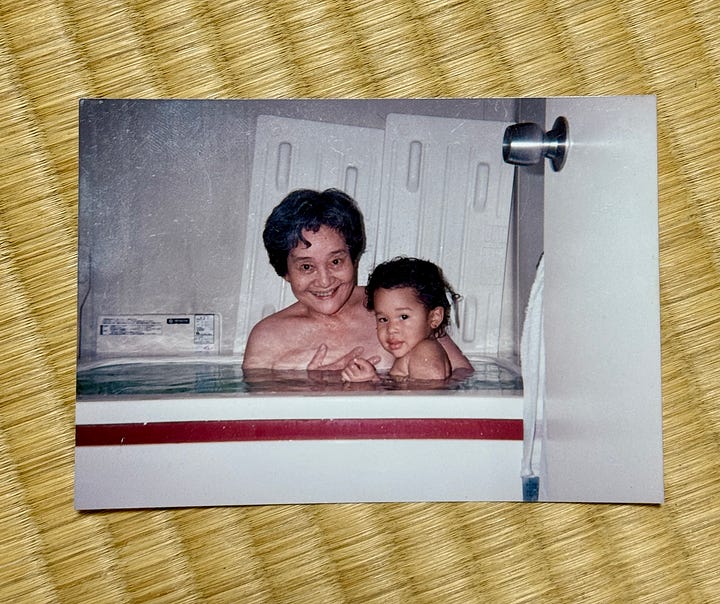
It’s just that I don’t know if I fit into any religion that I am aware of. I have always been spiritual because up to age five, I was close to my late grandma. Like, really close. So I don’t feel right addressing her as “grandma.” So allow me to call her Obaachan in this essay.
The rest of this essay contains depictions of childhood trauma, including references to domestic violence, child abuse, and the effects of a parent’s substance abuse. Please take care of yourself as you read.
My family situation back in the day was pretty rough. My biological parents were both young and reckless, and I was an unplanned pregnancy. My dad was a college student in the US, and was briefly visiting his family who had moved to Japan for a time. My mom was a singer, a Japanese person with a decent level of English and older than him. Anyway, I don’t imagine they had a mature relationship by the time they had me. I heard that Obaachan did not approve of my mom having a child with a Black man. But my mom didn’t listen, and went ahead and gave birth to me. I had Obaachan at hello. When she saw me, something softened. I was just a baby, and she was already mine. My dad was present during the birth, so he was very committed to being a father at such a young age. But since he was still in college at the time, he had to return to the US, leaving me, Mom, and Obaachan.
So by the time they finally got married when I was around one or two years old, I doubt they really understood what they were signing up for. Their marriage was a straight-up disaster, which can only be summed up as a “drug-addict mom violent toward dad” crisis. He was dependent on my mom to stay in Japan with me, and when he could not take it anymore, the divorce led to him being forced to return to Malawi. I think this is around the time when she started hitting me. Most of my memories from that time are a fog, yet three moments have somehow stayed with me, along with a clear recollection of what led up to each of them. My instinct was just to shut the fuck up and stay out of the way. I remember one day asking Mom where my dad was. She looked at me and said he was dead. I did not believe her. Something in me told me she was lying. I did not know where he was, but I knew he was not gone.
You might be wondering where Obaachan was all this time. Well, I’m sorry to tell you that, to my knowledge, Mom used to beat her too. So Obaachan didn’t want to provoke her. But what she did was comfort me afterward, telling me to breathe, because I had an uncontrollable cry that didn’t fade easily. She also tried to support my dad when he was living with us. She just didn’t know how to stop Mom.
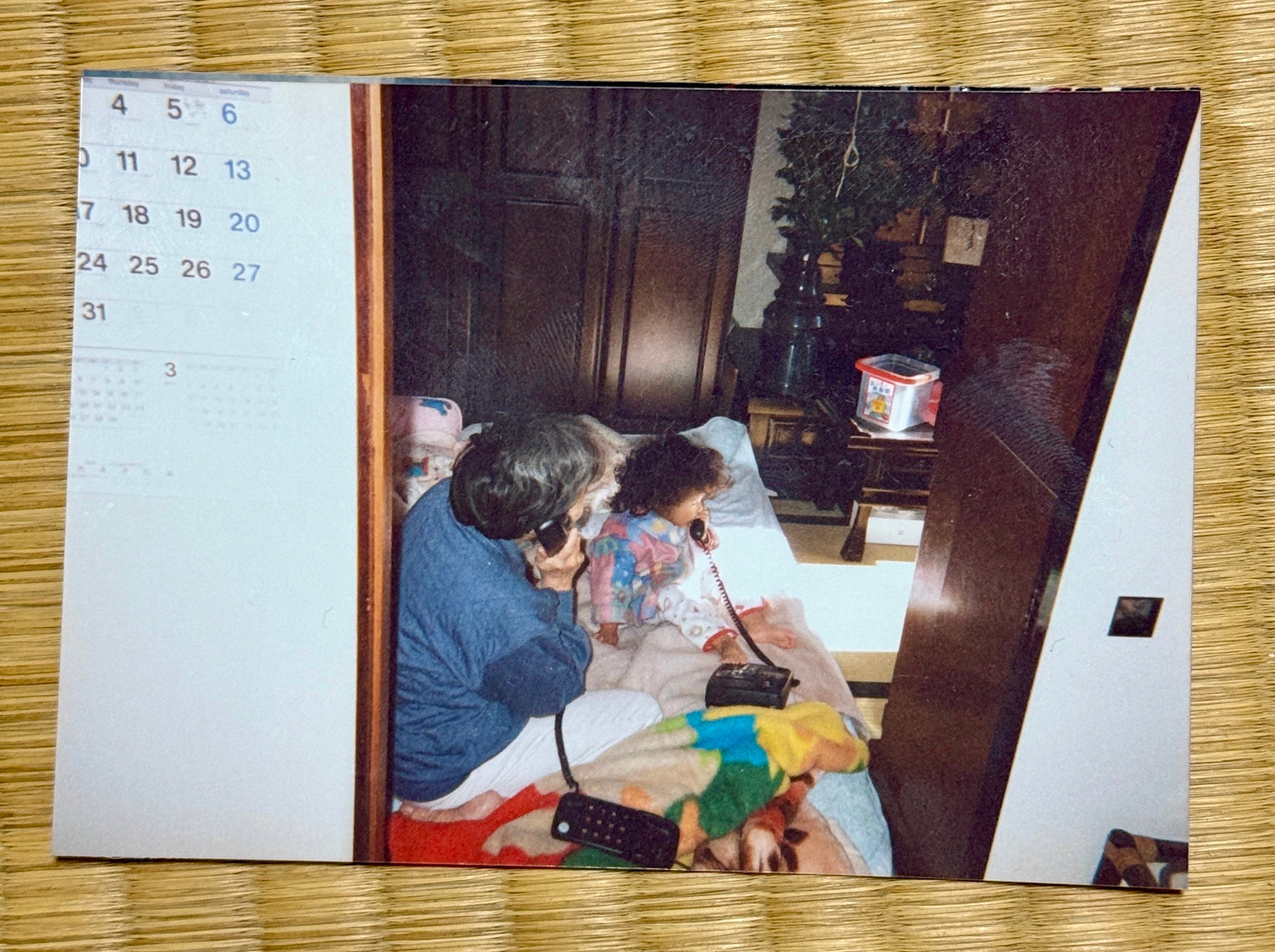
I was always in Obaachan’s room. She had her own room, very traditional, with tatami mats. She had a small TV, a desk with a zabuton where she would always write letters, and her own Buddhist home altar. On her altar she kept an incense burner, a bell, and often a vase with a bowl of water as an offering. She also had her prayer beads, commonly called malas, and a photo of her late husband at the far end. We chanted daimoku together at least twice a day, repeating the phrase Namu Myōhō Renge Kyō, which is a central mantra in Nichiren Buddhism. Of course, I didn’t know what was really going on, but I was just happy to do what Obaachan liked to do, to find pleasure in it, and I was determined to feel what she felt.
My dad remarried by the time I was five years old, so I was no longer in a dangerous situation. He managed to settle in Japan with me, with a new job and a new wife. He often told me that he was so influenced by Obaachan, and that she taught him a lot even with the language barrier. She practiced Buddhism openly and quietly embodied its emphasis on mindfulness. I think living with her slowly changed him, and over time he drifted away from Christianity. He had already come to see Christianity as something his people had been given at gunpoint, a colonial inheritance his ancestors were forced to adopt. He never taught it to me. By the time I was old enough to ask, he was more drawn to Rastafarianism, another tradition born from resistance, from people reimagining their own connection to the divine after it had been stolen.
I didn’t think for a second that the way I was brought up as a child was so unique. I was always spending my time with Obaachan. She would take me grocery shopping. She taught me how to play piano once a day, every day, and we participated in Buddhist rituals. I was a kid who already understood meditation, and I always needed to catch a breath if I was under stress. To this day, I still take the opportunity to pause, think of my ancestors—now that she is one of them—and tell them what I desire in my life. Some people call this a wish. To me, it was what Obaachan taught me: breathe, focus, and speak your intention into the space between heartbeats. She called it prayer. I call it manifestation.

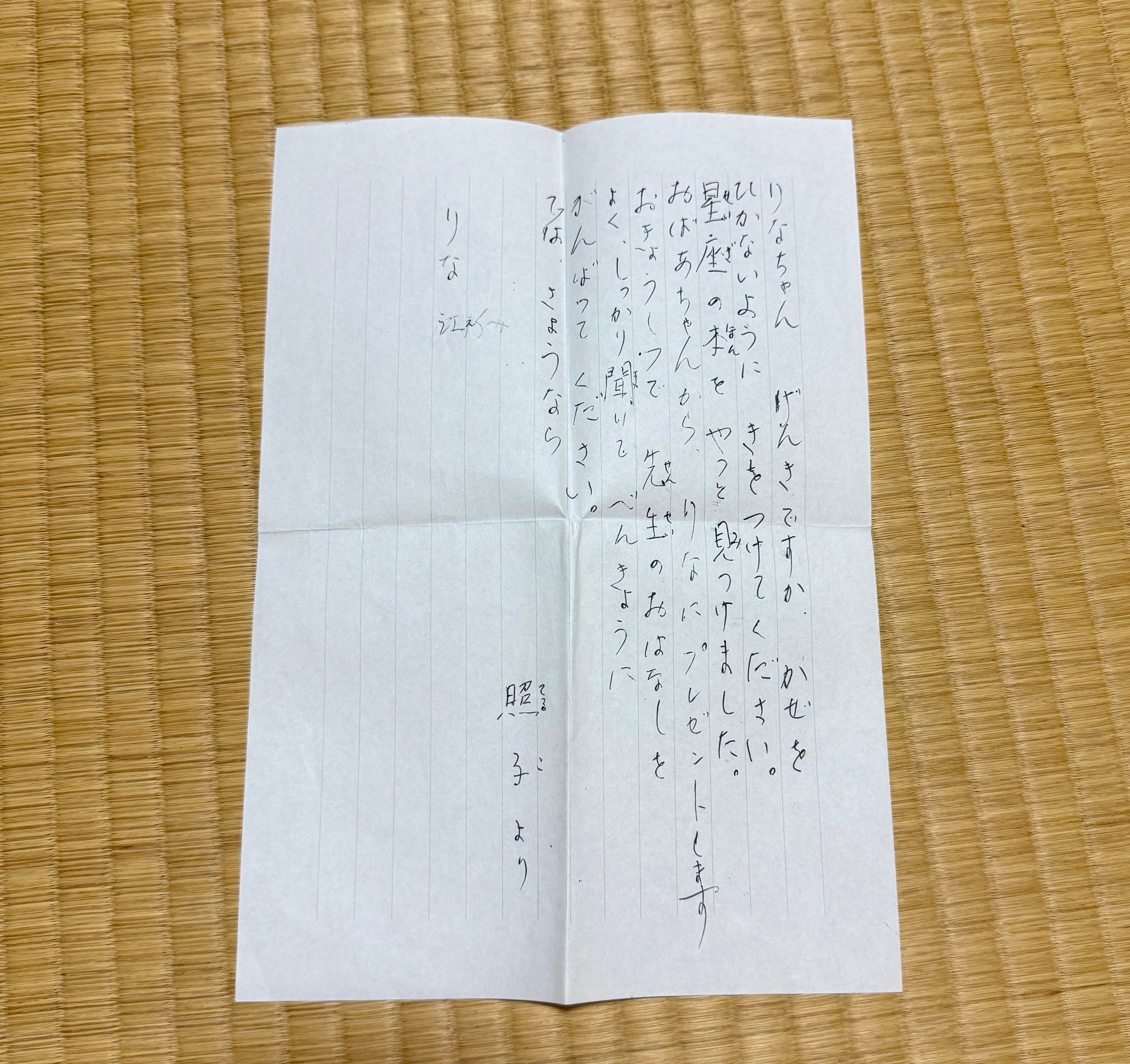
These days, I have been paying attention to the moon calendar and teaching myself astronomy. This curiosity came to me at random, which is interesting because Obaachan used to talk to me about astronomy too. I think I knew I was a Taurus before turning five. When I moved into a new home with Dad, she used to send me letters. One of them came with a fortune-telling book. On the recent new moon of July 14th, I meditated. This was the new moon that allowed you to reminisce on the past and truly acknowledge what you have been building. Then, after a long time, I was able to visualize Obaachan’s room. This is precisely why I was inspired to write this essay. I began to remember that as a child, she told me to manifest, to think of Dad in my head as I continued to breathe. She must have known that I would not survive if I kept enduring the abuse from my mom. And all the while, Obaachan was sick, fighting cancer.
Sometimes I wish I could be religious, just like everyone I met in Malawi. But my concept of spirituality always had something to do with my own inner world, and not the almighty God that will decide whether you enter Heaven or not. I found the courage to write this because I realized what I have been building my entire life is not a belief system, but a state of being. It is to breathe, to meditate, to manifest, and to continue honoring the woman who taught me all of it. Obaachan learned to love me despite her own doubts, and she protected me when no one else could. She continues to do so. I still don’t know if that longing will ever fade, but I know what I have. I am not a perfect Buddhist, and neither was she, but we are both determined to be the example of kindness that doesn’t need a name. Buddhism is the path that taught us how.


Leave a Comment