The last time I saw my biological mother, we were in a karaoke booth. We were supposed to be watching Harry Potter and the Philosopher’s Stone, but I was scared, so we saw Shrek instead. With time left over, she took me to sing. I don’t remember what I sang, but I remember her voice. For the first and only time, I heard the professional singer—not the addict, not the abuser—but the artist with the “transparent voice” her Wikipedia page would later coldly describe. It was beautiful. Those are my only happy memories of her.
For years, that memory was a confusing artifact. How could the source of my deepest fear also be the source of such breathtaking beauty? The answer, I would later piece together, lies not with her, but with the family that surrounded her—the family I barely knew. My story is not one of a family that failed me, but of a family that, in a profound act of love, chose me over their own blood.
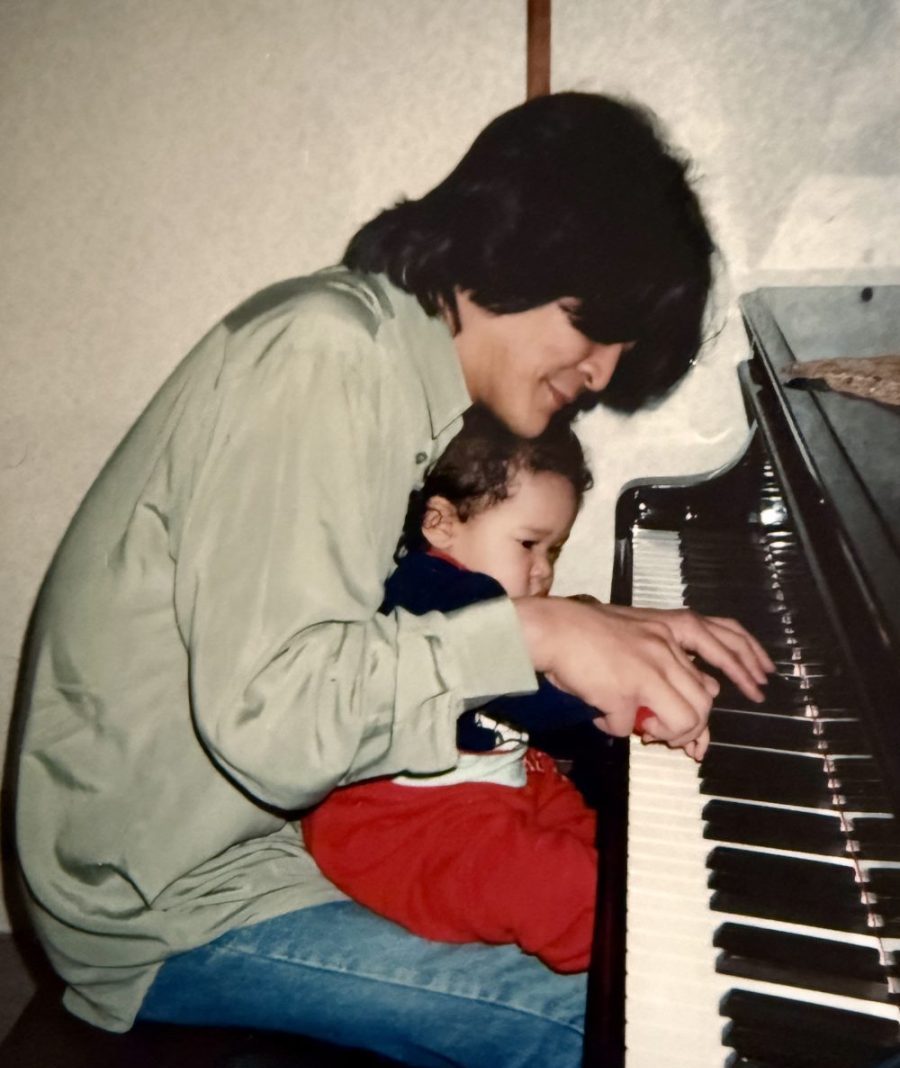
The official record tells one story. My grand uncle was a jazz pianist. My grandma was also a pianist and a singer. My uncles played instruments too. My mom was a pop idol. They were a proud, musical dynasty. But the private record, written on my childhood body and psyche, tells another. After my dad and mom divorced, the abuse began. My Obachan—my grandmother on my mother’s side—became my primary caretaker; she always let me sleep in her room, and we would take baths together. But when she was hospitalized due to cancer, that protection vanished, and the abuse worsened. It was then that my mom’s side of the family did the unthinkable: they intervened. They contacted my dad, who had returned to Japan. They stood witness. In the legal battle for my custody, everyone was on my dad’s side. Everyone. Including my Obachan.
This is the legacy I must consciously choose to see: the legacy of the protectors. In a culture that values family harmony, my mom’s side of the family chose truth. They saw a child in danger and acted, even when the source of that danger was their own blood. My Obachan, a woman I can barely remember, is not just a warm, fuzzy memory; she is my moral compass. Her legacy to me is not just the music in our bloodline, but the courage to protect the vulnerable, even when the cost is unimaginably high. I remember her for her tough one-on-one piano lessons and her devotion to Buddhism, which she encouraged me to participate in at our home; I will forever remember the chanting of “Namu Myōhō Renge Kyō.”
And from my mom, I carry a different inheritance: the knowledge of fragility, the sound of a beautiful voice hiding a broken spirit. For a long time, the chaos she inflicted felt like a stain, a shadow on my own worth. It whispered the worst lies—that trauma was my inheritance, that brokenness was my birthright.
But I have since learned a fundamental truth, one that acts as my shield and my solace, from the Zimbabwean author and Pan-Africanist Joshua Maponga: “Africans cannot be barbaric. Our bloodline, no matter where you’ve placed us, the melanin within us remains pure and good” (THEE ALFA HOUSE, 2024).
This truth reframes everything. It means the violence I witnessed and endured was not a reflection of my Blackness or my dad’s Malawian heritage. It was a symptom of her personal pain, her addiction—a human failing that knows no race. Embracing this truth allows me to fully claim the other, more powerful legacy: the legacy of the protectors. This belief is physically mirrored in a birthmark on my right arm, a dark patch that connects me to the Kadzamira side of my family. It allows me to see the bridge they built—a Japanese family and a Malawian father united to save a child—as the ultimate rejection of the very barbarism they saved me from.
So, I hold that last karaoke memory not as a sad artifact, but as a gift. It was my mother’s attempt, however flawed, at a normal moment. It was the one time she gave me the artist instead of the addict. In the end, my family chose my safety. But in that booth, for a few minutes, she tried to give me a song.
And now, I am finally learning how to sing on my own. It is a complex melody, woven from a Japanese family’s protective love and a Malawian resilience. It is a song that acknowledges the beautiful, broken voice I inherited, while knowing it does not define me. My song is rooted in the deepest truth I know: that my worth is inherent, my bloodline is pure and good. This is my gift to myself and to anyone who has been made to feel otherwise: the right to define our own worth, to find it pure and good amidst the grace and grief of our bloodlines, and to protect it, always.


Leave a Comment