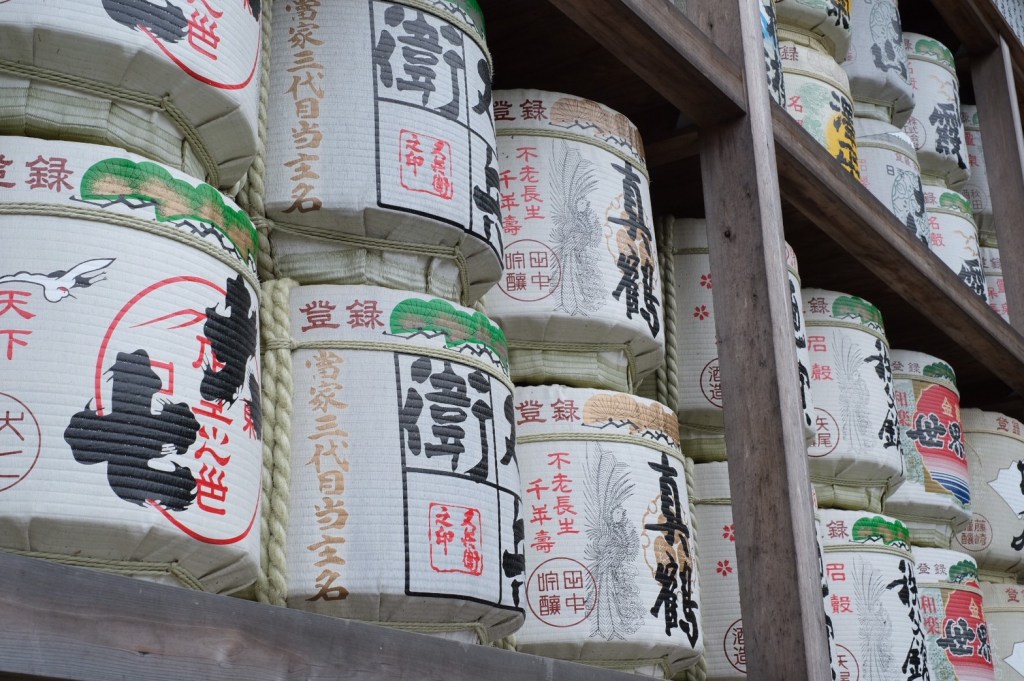
We often think of “work-life balance” as a luxury—a nice-to-have for when work slows down. We imagine burnout as a dramatic crash: a breakdown, a resignation letter slammed on a desk. We rarely see it for what it truly is: a slow, imperceptible bleed. A quiet draining of your boundaries, your discernment, your very sense of self, until you become an empty vessel, vulnerable to every poison the society offers.
In April 2018, I took a job that felt like a sign. It was at a company—let’s call it BF—that exported used cars to countries like Malawi. The role felt meaningful, and I imagined that if things went well, I might even travel to Africa on the company’s dime. I told management I aspired to join Marketing, but my bilingualism placed me in Sales instead.
As a new graduate, I believed I had to start somewhere. I accepted gladly, full of hope. The contract stated hours from 9 to 7, with a fixed monthly overtime allowance. We worked on national holidays because our customers were overseas. Our entire team—about 200 people—shared one floor, with the CEO and founder seated at the center, facing us all.
I soon became disillusioned by a toxic drinking culture. Promotions had less to do with merit and more with flattery. The CEO was a classic, patriarchal alpha who pressured employees to drink at nomikai, especially the younger staff. The year I joined was the first BF hired new graduates, and everyone, including the CEO, seemed eager to experiment on us. My biracial identity allowed me to politely decline his drinks without offense. But for my Japanese colleagues, the rule was unspoken and clear: you could not say no. The cruelest part was that if you overindulged and became sick, it was considered your own failing—a story forever attached to your reputation.
Though I didn’t develop a drinking problem, my habits escalated. What began as an occasional escape spiraled into a loss of control. Once, I threw a glass of water at a colleague who had become disrespectful and obnoxious. I later regretted it, but the incident didn’t harm my reputation; in others’ eyes, I became the victim when he physically attacked me in return.
This was the first lesson in the slow bleed: a compromised environment doesn’t just steal your time; it corrodes your behavior. The person you become within it is a distorted version of yourself, reactive and raw. It was no coincidence that I soon found myself seeking comfort in the arms of someone who appeared peaceful. My discernment, worn thin at work, was now compromised in my personal life.
That same year, I met a guy—let’s call him Mattel—who presented himself as stable and calm. He pursued me, insisting I was the most beautiful woman he had ever seen. It was cliché, but amid the chaos I had begun to accept as normal, I craved a sweet distraction.
Within a year, his ex-girlfriend began following me on Instagram and claimed they were still in a relationship. Mattel denied everything and begged me to stay. He insisted he wanted to be with me, a claim that grew hollow against the reality of his actions, yet one I clung to. The betrayal didn’t end there. While I was in Thailand, I learned he had reconnected with another former partner, a single mother who claimed Mattel believed her son was his. The situation disturbed me deeply and made me question everything.
The pattern was a mirror of my professional life: I was adapting to toxicity, mistaking persistence for passion, and learning to navigate a reality where words and deeds were permanently divorced.
Through it all, one truth became clear: I had no future at BF, and no chance of growing if I stayed. I decided to save all my paid time off for a solo trip to Malawi, deferring any job change until after.
In December 2019, I finally traveled to Malawi to see my family. I returned hoping for clarity, but my relationship with Mattel only deteriorated. His constant partying, lack of communication, and manipulative behavior wore me down. He dangled promises of marriage and children, but his actions never matched his words. And then, COVID happened.
The pandemic, in its awful global stillness, became the catalyst for a painful realization. Removed from the daily grind of the office and given distance from Mattel’s constant presence, I could finally feel the exhaustion: I needed more personal space to breathe, and I needed to improve my life. In May 2020, I left BF for a new company, CC, a move made possible only by the sales experience I’d never wanted. The pay was better, but the relief was superficial: the bonus system felt hollow, and the management was smothering. Once again, I was trading hours for yen, still financially precarious, and still searching for a real exit, one that led out of the maze rather than just another part of it. I even spent some time trying to learn forex trading, hoping it might offer an escape. I never got beyond the learning stage, and it ended up being little more than a distraction.
Then, in the summer of 2021, the slow bleed unexpectedly became a hemorrhage. Still raw from Mattel, I was sexually assaulted by a man I had just met during a night out. In a Harajuku studio, after repeated refusals, he overpowered me. I froze, a familiar and devastating paralysis, until my friend’s arrival abruptly ended the abuse. The aftermath was its own trauma: forty minutes pretending nothing happened, the desperate shower at home, and the police report that led nowhere due to “lack of evidence”. The most toxic thought of all, the one he and everyone else seemed determined to make me swallow, was the idea that I might be at fault. Had my boundaries, already so diluted, been invisible? Looking back, I can see I was in a profoundly vulnerable state. The assault felt like the final break in a vessel that had already been cracked.
Although I had lost all faith in him, Mattel insisted he was working on becoming better, and I felt trapped by his promises. In a quiet act of rebellion, I downloaded Bumble, seeking a glimpse of something sane outside the prison of our relationship. As a result, I matched with a man who would become my husband. His kindness was a quiet shock to the system—a lifeline I clung to even as I brought my shattered self into his care.
Weeks later, the final, cruel consequence arrived. I became pregnant with Mattel’s child. I had told him I would stop taking my pills, but he never changed his habits; a pregnancy felt almost inevitable. When it happened, he demanded an abortion and threatened to abandon me. I felt completely empty afterward. It became the concrete reason I needed to end things for good.
By January 2022, I had begun building something new with the man from Bumble. He was not a dramatic rescue, but a calm harbor. In his steadiness, I started the slow work of recovery. The bleeding had stopped. Now came the task of learning how to be full again, to tell nourishment from poison, and to rebuild a self that could finally say “no” without fear.
The culmination was not a single grand decision, but a series of quiet reclamations. In February 2022, I joined my current company, a fully remote role. Here, I finally found the work-life balance I had once dismissed as a luxury. It was a fundamental restructuring of my existence. The autonomy to manage my time, protect my energy, and focus on my well-being has been transformative. The chronic stress that once felt like my natural state has receded. For the first time in years, I am not running on fumes.
Now, my reflection comes from a place of stability, not crisis. My journal entries are no longer frantic scribbles but maps of growth. They show a person slowly, intentionally, rebuilding her discernment and refilling her sense of self. The boundaries I once bled out are now carefully tended.
The danger of having no work-life balance reveals itself not merely in lost time, but in a lost self. It is the slow bleed that makes you porous to toxic environments and poisonous people, that erodes your judgment until you mistake chaos for passion and manipulation for love. It leaves you an empty vessel, susceptible to every harm. My story is a testament to that peril. But it is also a testament that the bleed can be stopped. Balance is not a perk; it is the essential barrier that keeps the world’s chaos out and your spirit in. It is the precondition for not just surviving, but finally, beginning to thrive.


Leave a Comment